|
http://www.peernet.com/download/PNTIFSetup.php TIFF Image Printer 8.0.015 - November 2009 |
|
Developer's Portal Contains developer information and downloads that demonstrate how to automate the printer (API, Scripting, COM) |
|
Buy Now To Get The Full Version |
|
Quick Start Guide Learn how to use the TIFF Image Printer to create TIFF files from any Windows Applications. |
Converting Microsoft® Word documents to TIFF images is easy with TIFF Image Printer!
With just a few clicks you can convert your Microsoft® Word document into a TIFF image suitable for faxing, emailing, importing into eDiscovery and document management software, and many other purposes. TIFF Image Printer's extensive options allow you to create the exact type of TIFF image you require.
The information in a TIFF image is very difficult to alter which makes them ideal for protecting information being archived or distributed over the internet. As one of the most commonly used file formats for document imaging, document management and eDiscovery software, you can e-mail a TIFF image to virtually anyone and be sure that they will be able to open it.
Converting your Microsoft® Word documents to TIFF images is as easy as printing when using the TIFF Image Printer. You can create separate TIFF files or combine multiple Word documents into a single multi-page TIFF with the click of a button.
Merging your Word files with other formats like Excel spreadsheets and PowerPoint presentations, e-mail messages or web pages is easy as the TIFF Image Printer works with any Windows application.
Step-by-Step
Creating a multi-paged TIFF file from a Word document
Adding a Word document or other file to an existing multi-paged TIFF file
How to customize the type of TIFF file created
When you install TIFF Image Printer a new printer named TIFF Image Printer 8.0 is installed. The TIFF Image Printer 8.0 is a virtual printer - this means that instead of creating a paper copy of your document, it will create a TIFF image file on your computer. You can find this printer in the Devices and Printers folder on Windows® 7, the Printers folder if you are running Windows Vista or the Printers and Faxes folder if you are running Windows® XP.

Creating a multi-paged TIFF file from a Word document
| 1) | Open your document in Microsoft® Word. |
| 2) | If you are running Office 2010 ( instructions for Office 2007 and Office 2003, Office XP, Office 2000 are below): |
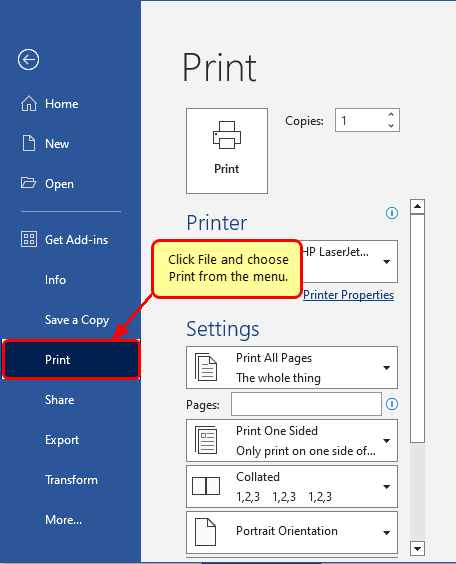
| a) | Click File and then choose Print from the menu. |

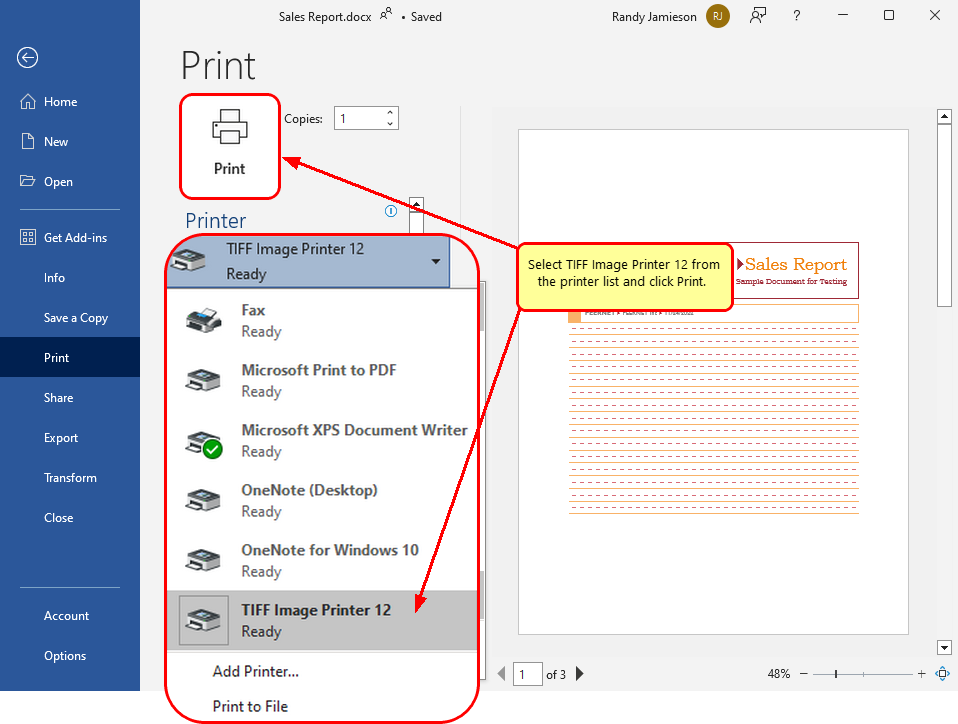
| b) | Choose TIFF Image Printer 8.0 from the list of printers then click the Print button above the printer list. |

| a) | Click the Microsoft Office button in the upper left corner, then click Print. |

| b) | In the Print dialog, select TIFF Image Printer 8.0 from the list of printers, then click OK. |

| a) | Click File and then choose Print from the menu. |

| b) | In the Print dialog, select TIFF Image Printer 8.0 from the list of printers, then click OK. |

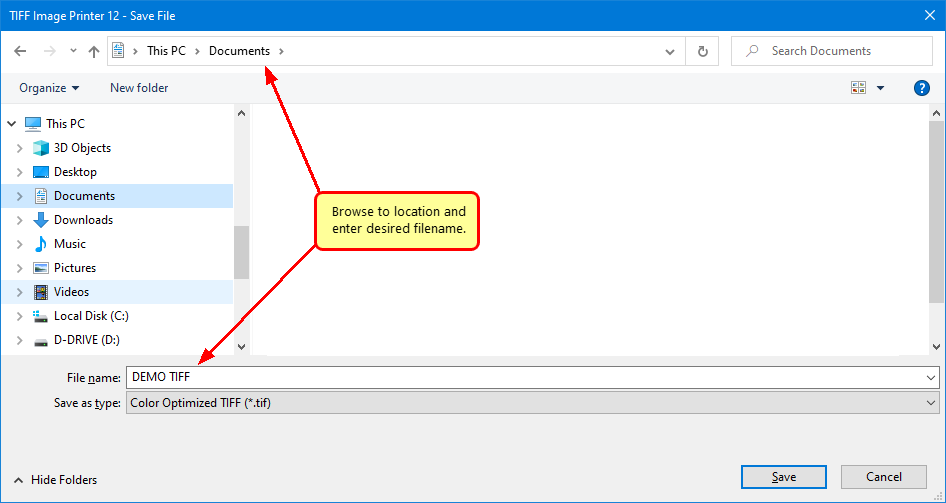
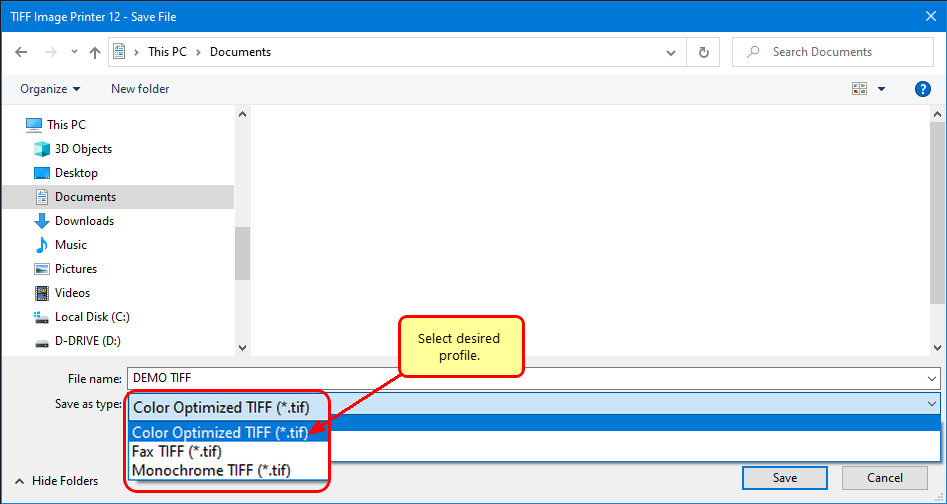
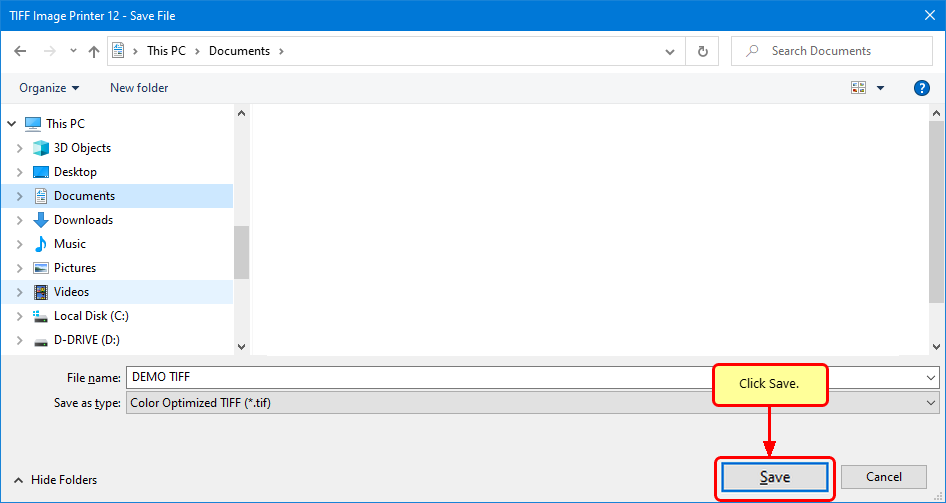
| 5) | The TIFF Image Printer 8.0 - Save Image File dialog will appear. |
| a) | In the Save in field, choose the folder where you want to save your TIFF image. Your My Documents folder is selected by default but this can be changed to a different location. |
| b) | In the Filename field the name of your document may already be filled in; this can be changed if desired |
| c) | Click the Save button to create your TIFF image. |

| 6) | Your new TIFF image is now being created using the current TIFF Image Printer 8.0 settings. You can easily add more pages to this TIFF image from another file by following the steps below. |
Adding a Word document or other file to an existing multi-paged TIFF file
| 1) | Open the document or other file that you want to add to your existing TIFF image. This can be an Excel spreadsheet, a PowerPoint presentation, or any other file you can print. The steps below are for a Word document. |
| 2) | Print that document to TIFF Image Printer 8.0. See Creating a multi-paged TIFF file from a Word document above for complete printing instructions. |
| 3) | The TIFF Image Printer 8.0 - Save Image File dialog will appear. |
| a) | In the Save in field, choose the folder where your existing TIFF image file is located. |
| b) | Select your existing TIFF image file by highlighting it in the list of files, or by typing the same name into the File name field. |
| c) | Check Append to existing file or sequence and leave Multi-paged (All pages in a single file) selected. |
| d) | Click Save to add the pages from this document to the end of your TIFF image file. |

| 4) | The pages in the second file have been added to the end of the TIFF file. You can repeat these steps for any other files you want to add. |
How to customize the type of TIFF file created
You can easily customize the type of TIFF created, changing such options as the resolution (or DPI), creating color or black and white TIFF images, creating faxable TIFF images, or modifying the compression settings used. TIFF Image Printer's many options allow you to create the exact type of TIFF image you need.
In most applications, the TIFF settings can be accessed through the Print dialog when you are printing your document. This will only change the settings used for this document at the time of printing.
To change the settings you will need to click a button or link labeled "Options", "Preferences", "Advanced Options" or something similar. This can vary depending on the application you are running, as shown below with the different wording for Word 2010 and Word 2007.
Setting the TIFF settings through the Printers folder (this is the Printers and Faxes folder on Windows XP or the Devices and Printers folder on Windows 7) will set them globally so that the same options will be used when printing to TIFF Image Printer from any application. See Setting Printing Preferences in the on-line user guide for more information.
|
|||||||
|
|||||||
|
Our Customers